
Artificial IntelligenceA model cannot learn a useful distinction if the people labeling its examples apply different rules. Learn how to define labels, handle ambiguous cases, resolve disagreements, and maintain a dataset as the task changes.
Read article · 4 min↗

Artificial IntelligenceAn AI feature can be accurate yet frustratingly slow. Learn how to measure response time, identify delays in an inference workflow, and choose practical improvements without overlooking quality or cost.
Read article · 4 min↗

Artificial IntelligenceA useful AI evaluation set does more than collect prompts and preferred answers. Learn how to define the task, select representative and difficult cases, write review criteria, and keep the test set useful as an application changes.
Read article · 4 min↗

Artificial IntelligenceAn AI model can perform well during testing and become less reliable after deployment. Learn how data drift, concept drift, and pipeline problems differ—and how to build monitoring that leads to useful action.
Read article · 4 min↗

Artificial IntelligenceQuantization reduces the numerical precision used by an AI model, potentially lowering memory requirements and improving performance. Learn how it works, why smaller models are not always faster, and what to test before choosing a quantized version.
Read article · 4 min↗

Artificial IntelligenceDiffusion models turn random noise into coherent images through a learned refinement process. Here is how training, denoising, text prompts, and guidance work together—and why the results can still miss important details.
Read article · 4 min↗

Artificial IntelligenceNeural networks learn by adjusting numerical parameters to reduce prediction errors. Here is how weights, activation functions, loss, and backpropagation work together—and why better training performance does not always mean better predictions.
Read article · 4 min↗

Artificial IntelligenceSemantic search helps AI systems find information by meaning, not just matching words. Learn how embeddings represent text, how vector similarity ranks results, and what makes a semantic search system useful and reliable.
Read article · 4 min↗

Artificial IntelligenceAI assistants can make everyday work easier, but prompts, attachments, and connected tools can expose information you did not intend to share. Learn how to minimize sensitive inputs, evaluate privacy controls, limit access, and build safer habits.
Read article · 4 min↗

Artificial IntelligenceLocal AI offers control and offline access, while cloud services reduce hardware demands and simplify scaling. The better choice depends on your workload, memory requirements, usage patterns, and willingness to maintain the system.
Read article · 4 min↗

Artificial IntelligenceChatbots and AI agents can share the same conversational interface, but they differ in how they use tools, choose actions, and operate without human input. Understanding those differences helps teams select useful systems and set appropriate limits.
Read article · 4 min↗

Artificial IntelligenceAI speech recognition turns sound into text by combining acoustic clues with learned language patterns. Understanding that process helps explain why accents, background noise, and specialist vocabulary can derail a transcript—and what you can do to improve accuracy.
Read article · 4 min↗
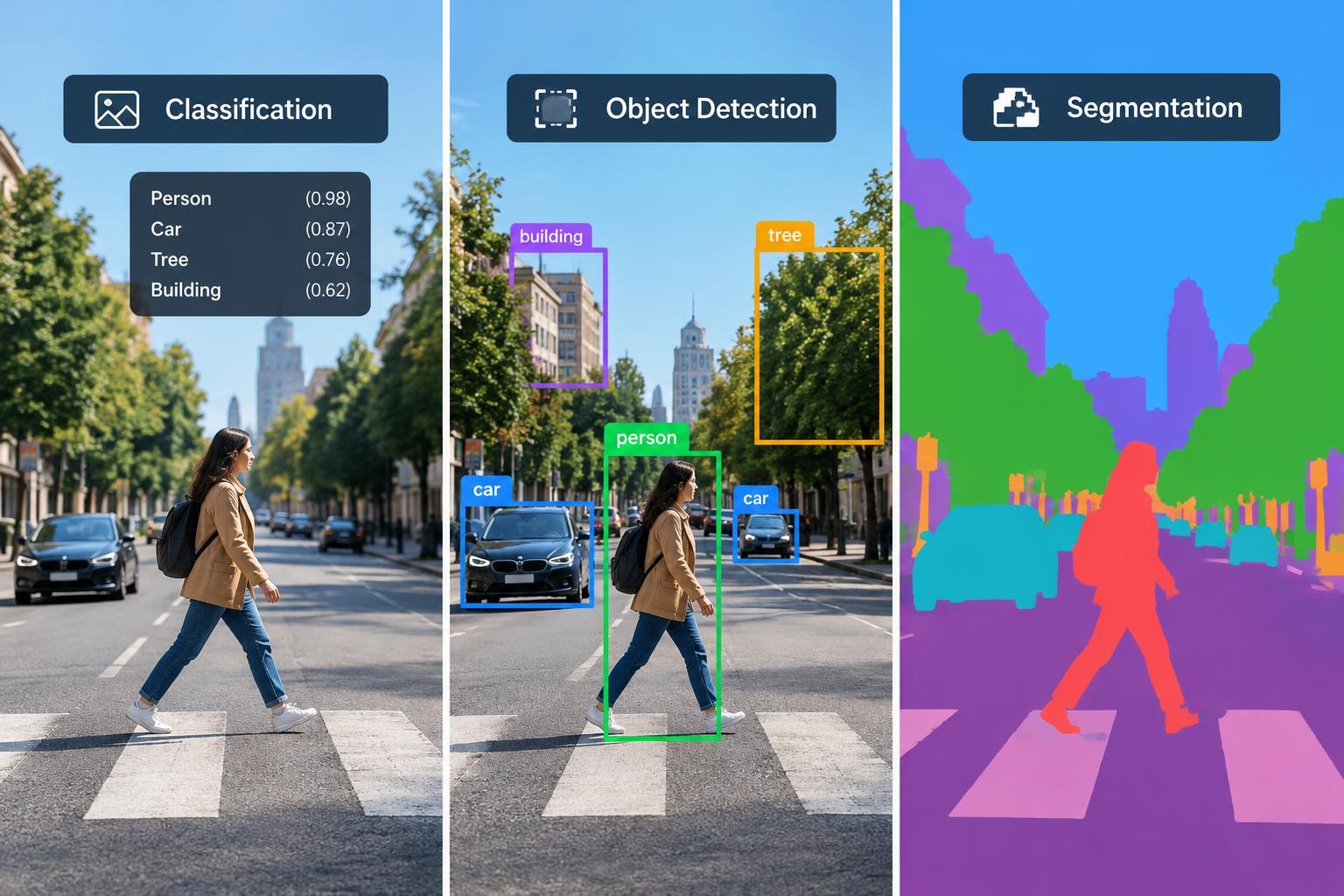
Artificial IntelligenceClassification labels an image, detection locates objects, and segmentation assigns labels to pixels. Learn how these computer vision tasks differ, what their outputs mean, and how to choose the right approach for a practical AI project.
Read article · 4 min↗
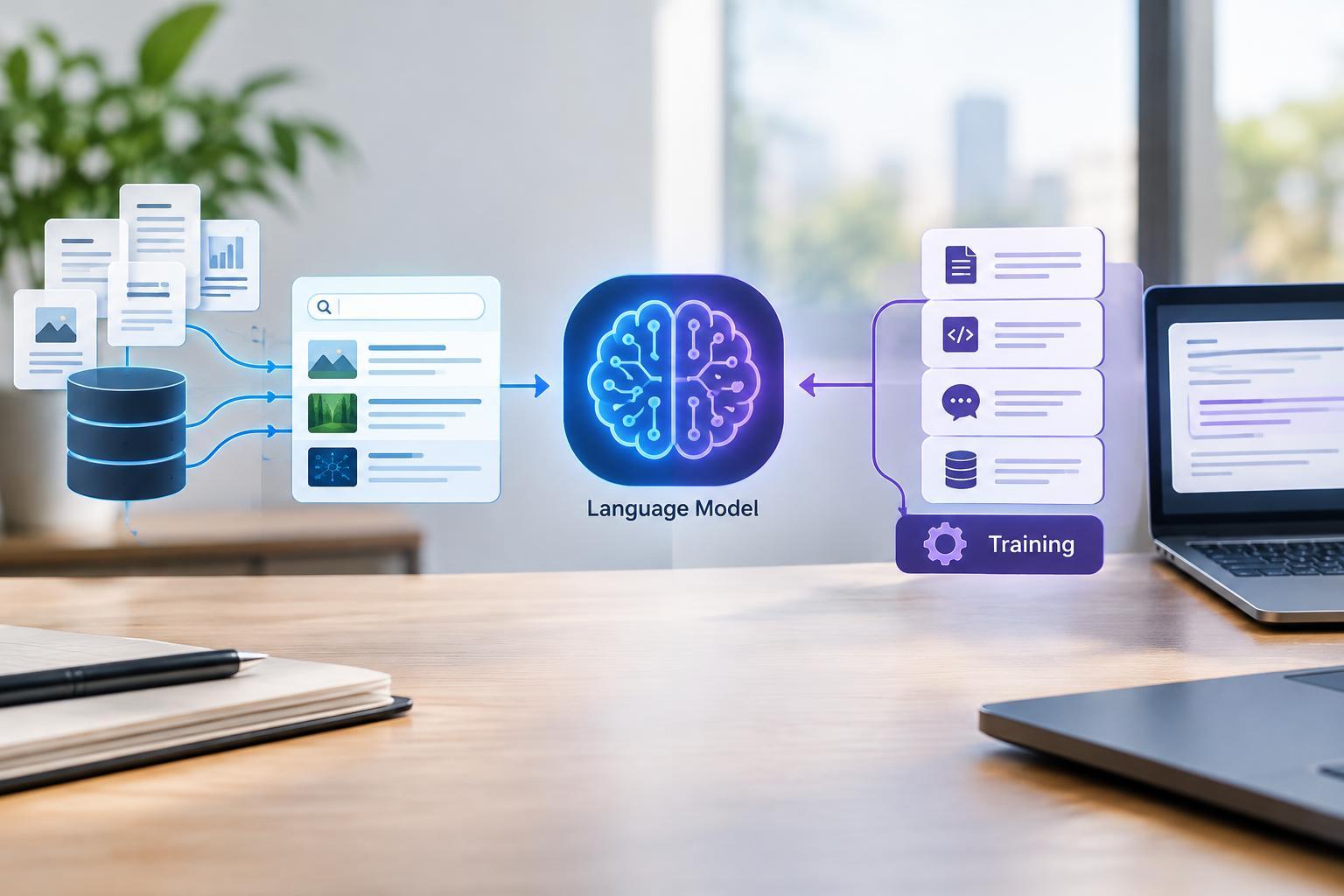
Artificial IntelligenceRetrieval-augmented generation and fine-tuning solve different problems. Learn how each approach works, when to use it, and why combining them can be more effective than choosing one.
Read article · 4 min↗

Artificial IntelligenceBetter AI prompts make the task, context, boundaries, and expected output explicit. Learn how to build clear instructions, use examples effectively, set useful constraints, and choose formats that make responses easier to check and reuse.
Read article · 4 min↗

Artificial IntelligenceAI-generated answers can sound convincing even when they are wrong. Learn why hallucinations happen, which claims deserve extra scrutiny, and how to build a practical verification routine before relying on an answer.
Read article · 4 min↗

Artificial IntelligenceA language model does not read an unlimited conversation or remember everything you tell it. Understanding tokens, context windows, and stored memory helps explain those limits—and makes it easier to work effectively with AI.
Read article · 4 min↗

Artificial IntelligenceFeature rankings and local explanations can make machine learning systems easier to inspect, but they are not proof of causation, fairness, or reliability. Learn how common explanation methods work, where they can mislead, and how to use them responsibly.
Read article · 4 min↗

Artificial IntelligenceBias in AI often starts before a model is trained. Learn how sampling, labels, historical decisions, and feedback loops can skew datasets—and how to identify and reduce those problems with practical checks.
Read article · 4 min↗

Artificial IntelligenceA model can fail by learning too little or by memorizing too much. Learn how training and validation results reveal underfitting and overfitting, which fixes to try, and how to avoid misleading evaluations.
Read article · 4 min↗

Artificial IntelligenceA classification model can achieve high accuracy while missing the cases that matter most. Learn what accuracy, precision, recall, and F1 measure, how class imbalance changes their meaning, and how to choose metrics that reflect your model’s purpose.
Read article · 4 min↗

Artificial IntelligenceA reliable model evaluation starts with the right data split. Learn how training, validation, and test sets work, when to split by time or group, and how to prevent preprocessing and tuning decisions from leaking information.
Read article · 4 min↗
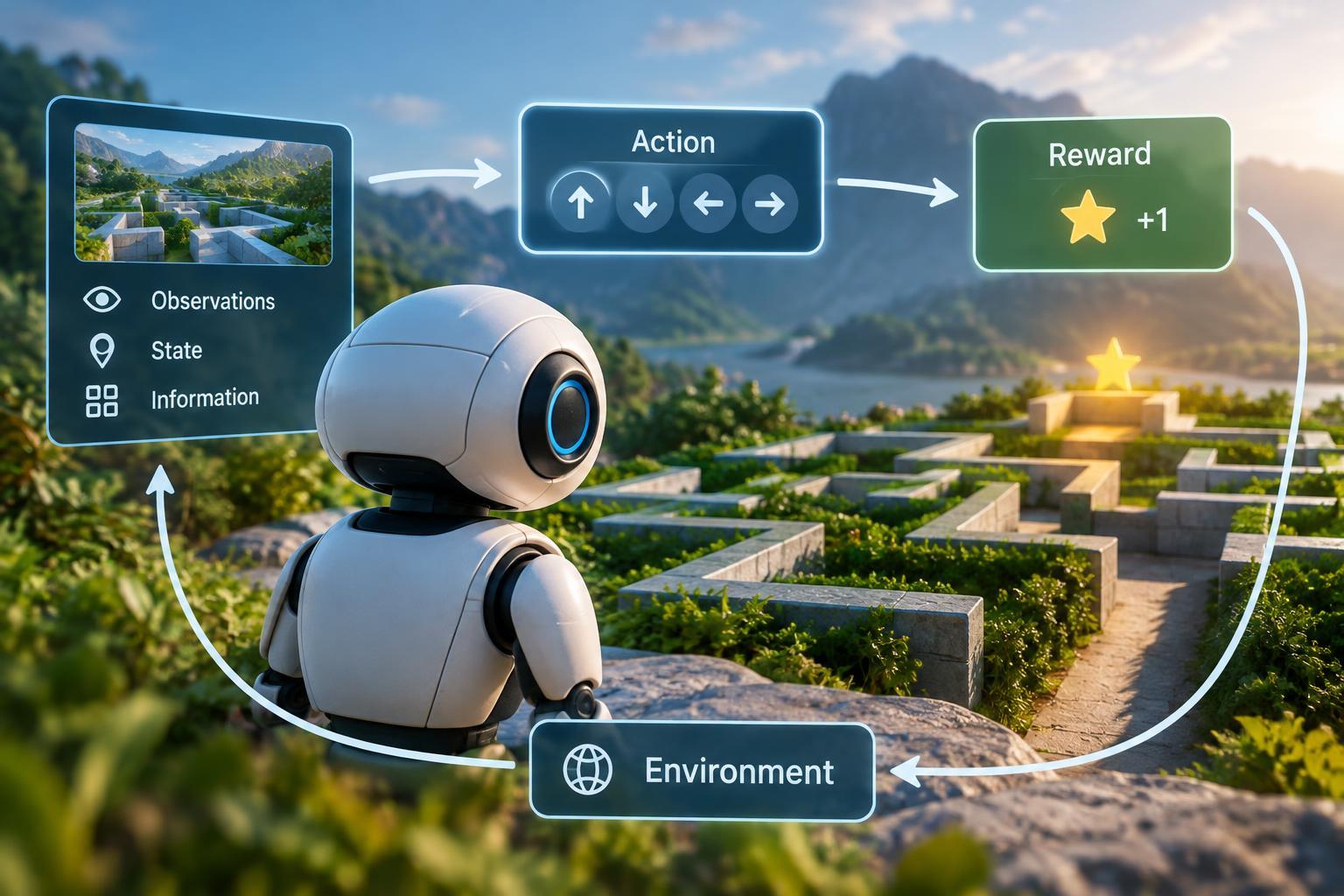
Artificial IntelligenceReinforcement learning teaches AI systems to make decisions through feedback. Learn how agents, actions, rewards, and environments work together, why exploration matters, and how poorly designed incentives can produce unexpected behavior.
Read article · 4 min↗

Artificial IntelligenceArtificial intelligence, machine learning, and deep learning are related, but they are not interchangeable. Learn how they fit together, what distinguishes their methods, and when each approach can be useful.
Read article · 4 min↗

Artificial IntelligenceA convincing AI demonstration is not proof that a workflow is ready for automation. Learn how to define success, build realistic tests, measure errors, and introduce safeguards before giving an AI system more responsibility.
Read article · 4 min↗