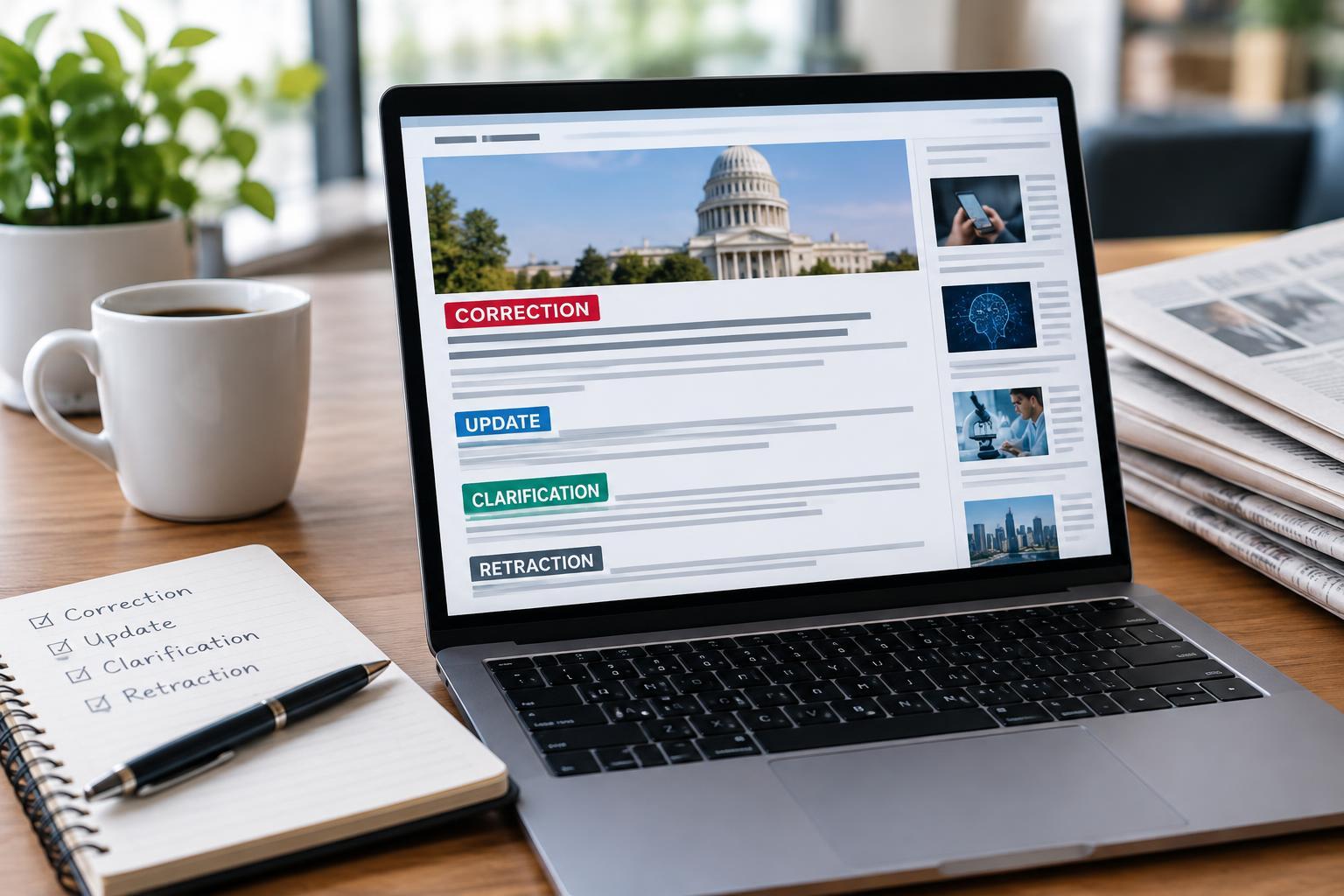
Different Changes Need Different Labels
A news article is not always a finished object. New evidence may emerge, a source may revise an account, or a reader may spot an error. The important question is not simply whether a story changed, but whether the outlet explains what changed and why. Clear labels help readers distinguish developing information from mistakes in the original reporting.
An update generally adds information that became available after publication. A correction addresses something that was inaccurate when published, such as a wrong name, an incorrect calculation, or a misleading description. A clarification resolves ambiguity or supplies context where the wording may have left readers with the wrong impression. It should not be used as a softer label for a factual error.
A retraction signals that an article, or a substantial part of it, can no longer be supported. Newsrooms may use these terms differently, so the explanation accompanying the label matters more than the label alone.
What a Useful Correction Should Tell Readers
A useful correction identifies the error and gives the accurate information. Saying only that an article “has been amended” leaves readers guessing. If a story confused a company’s revenue with its profit, the notice should name that distinction and explain whether correcting it changes the article’s conclusions. Accountability requires more than quietly replacing a word or number.
Placement matters too. An error affecting the central premise deserves a prominent notice; a minor factual mistake may warrant a shorter note. Ordinary typographical fixes that do not alter meaning can usually be handled with less ceremony. These judgments should reflect the effect on readers, not how embarrassing the mistake is for the outlet.
A clear date or timestamp helps readers understand when the correction occurred. For articles with several substantive revisions, a brief change history can make the sequence easier to follow. Notices should provide enough detail to explain the mistake without unnecessarily repeating sensitive personal information or harmful false allegations.
When an Update Is Not Enough
Developing stories often contain genuine uncertainty. Early estimates can change, preliminary findings can be challenged, and competing accounts may remain unresolved. Responsible reporting marks those limits at publication. If an article accurately described a provisional claim as provisional, later evidence may call for an update rather than a correction.
The situation is different when the original story presented an unsupported claim as established fact. Adding a new paragraph does not, by itself, acknowledge that failure. Likewise, a headline that overstated a scientific finding needs attention even if the body text contained appropriate caveats. Readers encounter headlines, alerts, and summaries independently of the full article.
Retraction becomes relevant when targeted corrections cannot repair the reporting’s foundation—for example, when crucial evidence proves unreliable and the central allegation cannot be substantiated. A transparent notice explains what cannot be supported and what action the outlet has taken. Where feasible, keeping the original address accessible with a clear notice helps prevent old links from losing their context.
Fixing the Story Wherever It Traveled
Correcting a webpage does not automatically correct the wider information environment. The original claim may also appear in a newsletter, social post, video caption, podcast, push notification, or syndicated copy. A practical correction process checks these routes and addresses the places where readers are likely to encounter the error.
Some formats cannot be edited after delivery. In those cases, a follow-up message or a correction in a subsequent edition can reach at least part of the original audience. Partner publications may need direct notification. Headlines, charts, captions, and downloadable files also deserve review because they can preserve an error after the main text has been fixed.
Automation can help locate repeated wording or distribute approved notices, but it does not settle editorial questions. Search engines, cached pages, and AI-generated summaries may continue showing older information. An outlet cannot guarantee that every copy disappears, but it can keep the corrected version clear and document reasonable efforts to notify others.
How Readers Can Assess and Report Errors
When evaluating a correction, ask whether it names the problem, supplies the accurate account, and explains any effect on the story’s conclusions. Also check whether the headline and other prominent elements now match the corrected reporting. The mere presence of corrections is not proof that an outlet is unusually unreliable; willingness to acknowledge mistakes is one part of accountability.
To report a possible error, send the article title or address, identify the exact passage, and explain the factual issue. Include relevant supporting material when available, preferably something the newsroom can verify directly. Separate disagreement with the article’s interpretation from a checkable mistake, and avoid sharing unnecessary private information.
A newsroom may need time to investigate, particularly when sources conflict. What matters is a process that can receive concerns, assess evidence, and communicate meaningful changes. Trust is supported not by pretending mistakes never happen, but by making the record more accurate and the repair visible.